January is when ambitious businesses stop reacting and start planning. Budgets are being finalized, growth goals are set, and leadership teams are asking a critical question: How do we make our digital marketing actually drive results in 2026?
The challenge is that many companies still approach digital marketing in silos—posting on social media when they remember, “doing SEO” without a plan, or investing in video without tying it back to revenue. Digital marketing planning changes that. A clear, integrated marketing strategy for 2026 turns scattered efforts into a growth engine—especially when SEO, social media, content, video, and your website all work together.
If you’re searching for digital marketing planning near me or looking for a partner who thinks beyond tactics, this guide outlines how to build a strategy that supports real business growth—not just activity.
Why Reactive Marketing Fails (and Planning Wins)
Reactive marketing feels productive, but it rarely delivers consistent ROI. Posting “when there’s time” or running ads without a long-term objective leads to wasted spend and mixed messaging.
A planned integrated digital marketing strategy allows you to:
-
Set clear priorities for the year
-
Allocate budget intentionally
-
Measure performance against real KPIs
-
Adapt proactively instead of scrambling
In short, planning gives your marketing direction, discipline, and momentum.

How SEO, Social, Content, and Video Work Together
The most effective digital marketing strategy for small business owners is integrated—not channel-specific.
SEO as the Foundation
SEO informs everything else. Keyword research tells you:
-
What your audience is actively searching for
-
How content should be structured
-
Which services and pages should drive conversions
Your website and SEO strategy should anchor your plan (see our SEO services).
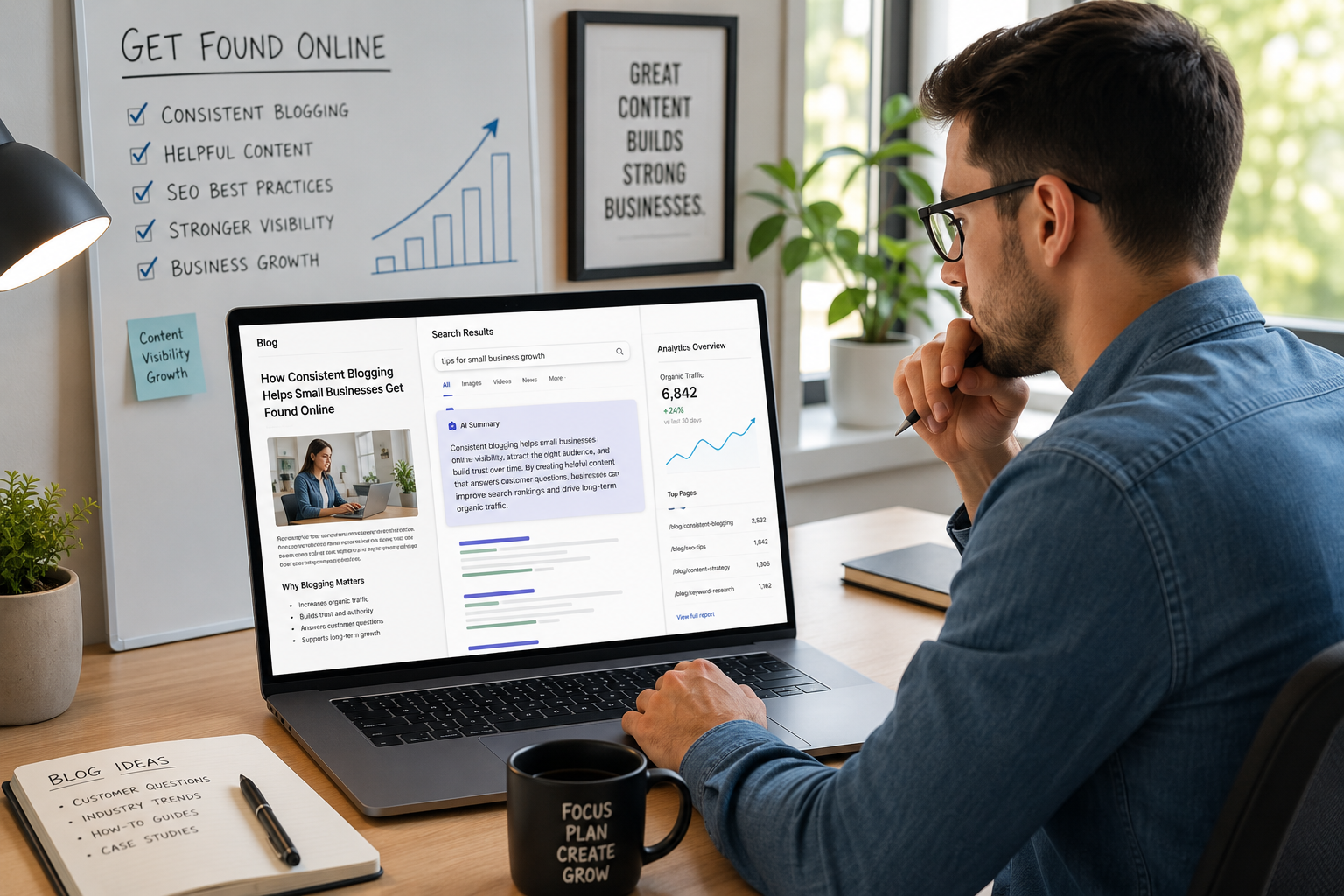
Content & Blogging for Authority
Strategic content supports:
-
Organic rankings
-
Sales conversations
-
AI search visibility
Every blog, landing page, and guide should align with SEO goals and customer intent (learn more on our blog resources).
Social Media for Distribution & Trust
Social media amplifies your content, builds credibility, and keeps your brand visible. It works best when planned alongside SEO and content—not treated as a standalone task (social media strategy).
Video for Engagement & Conversion
Video marketing reinforces trust, explains complex services, and boosts conversion rates across your site and social channels (video marketing services).

Setting Realistic Goals and KPIs for 2026
Strong digital marketing planning starts with measurable goals:
-
Organic traffic growth
-
Lead quality and volume
-
Conversion rate improvements
-
Cost per acquisition (CPA)
-
Engagement and brand visibility
Avoid vanity metrics. Focus on KPIs tied to revenue, efficiency, and long-term growth.
Marketing Budget Planning Across Channels
One of the biggest January mistakes is overspending on a single channel. Smart marketing budget planning balances:
-
SEO and website optimization (long-term ROI)
-
Content creation (authority and visibility)
-
Social media management (brand trust)
-
Paid campaigns (short-term acceleration)
-
Video production (engagement and conversion)
Your budget should reflect both immediate opportunities and sustainable growth.
Aligning Website, SEO, and Content Strategy
Your website is not a brochure—it’s your sales engine. For 2026:
-
Website structure must support SEO
-
Content must guide users toward conversion
-
Messaging must align across all channels
If your website isn’t built to convert traffic into leads, no amount of marketing will fix it (web strategy services).

Common January Mistakes That Hurt the Rest of the Year
Businesses often derail growth by:
-
Skipping strategy and jumping into execution
-
Chasing trends instead of data
-
Ignoring SEO until mid-year
-
Setting unclear or unrealistic KPIs
-
Treating vendors as task-doers, not partners
Planning early prevents costly resets later.
Why Vision Fillers
Vision Fillers isn’t just a vendor—we’re a strategic partner. Our team specializes in building integrated digital marketing strategies that align SEO, social media, content, video, and web performance into one cohesive plan.
Why businesses choose Vision Fillers:
-
Proven experience across service-based industries
-
Strategy-first, relationship-driven approach
-
Transparent reporting and clear KPIs
-
Scalable solutions that grow with your business
If you’re planning for 2026 and want a partner who thinks long-term, let’s talk. Contact Vision Fillers.
Frequently Asked Questions
What is digital marketing planning?
Digital marketing planning is the process of aligning SEO, content, social media, video, and web strategy around clear business goals and KPIs.
How early should businesses plan their marketing for 2026?
January is ideal. Planning in Q1 sets direction, establishes budget controls, and defines performance benchmarks for the entire year.
Is digital marketing strategy different for small businesses?
Yes. A digital marketing strategy for a small business focuses on efficiency, prioritization, and channels with the highest ROI.
How do SEO and social media planning work together?
SEO drives long-term visibility, while social media distributes content, builds trust, and supports brand awareness.
What budget should be allocated to digital marketing?
Budgets vary, but strong marketing budget planning balances long-term investments (SEO, content) with short-term growth tactics.