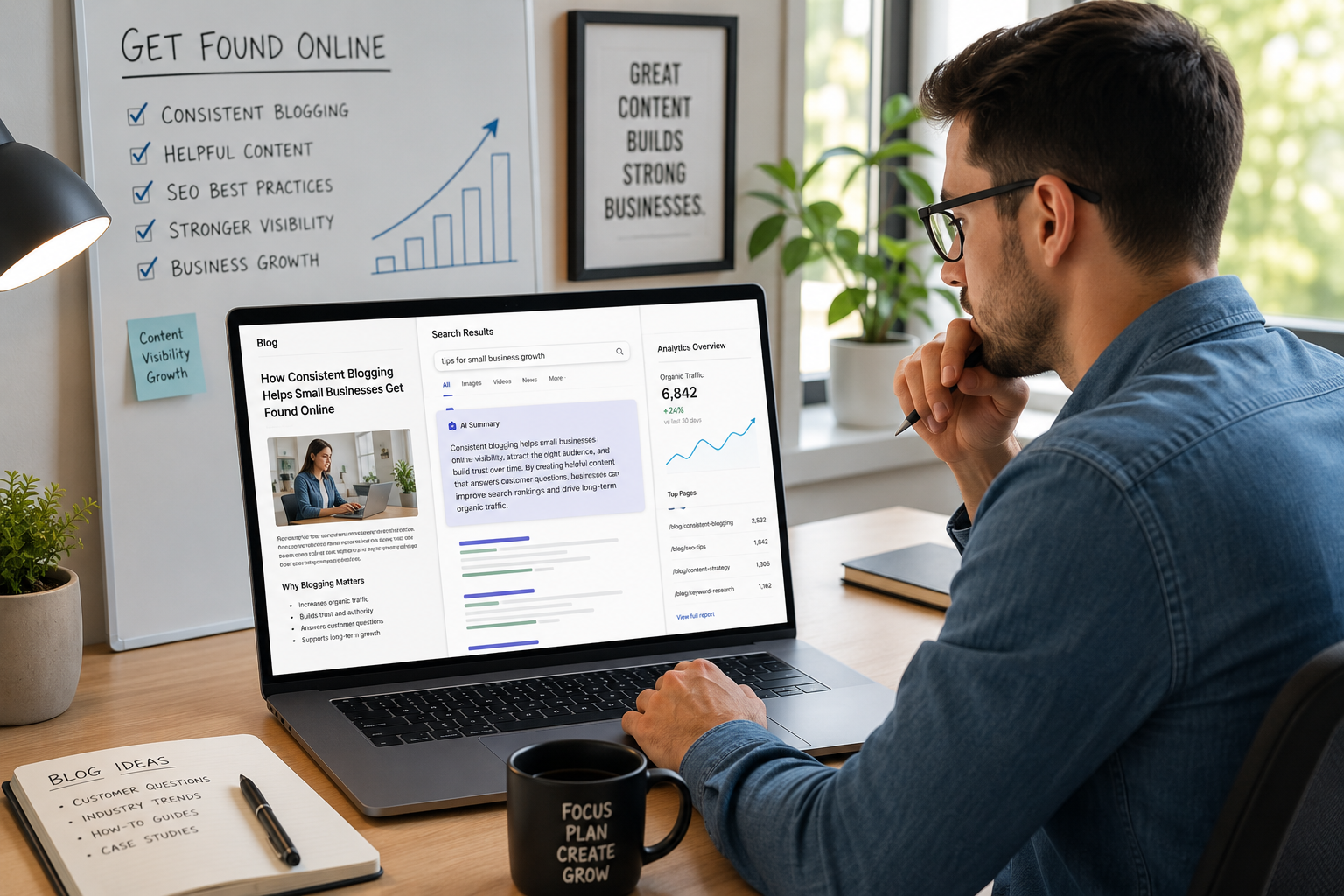
You have probably heard it before: blogging is dead. Social media took over. Short-form video is everything. Why would anyone stop and read a 900-word article when they can scroll through a 30-second reel?
Here is the truth: blogging is not dead. It has evolved, and the businesses that understand how to use it strategically are quietly pulling ahead of competitors that have given up on it. If you stopped blogging, or never started, this is the post that will change your mind.
Why blogging is important for business comes down to one core idea: it is the single most cost-effective way to build trust, drive consistent organic traffic, and generate qualified leads over the long term.
Blogging Fuels Your SEO Strategy
Search engines reward fresh, relevant content. Every blog post you publish is a new indexed page, a new opportunity for Google to surface your business when a potential customer is searching for answers. Without a blog, your website is essentially a static brochure. With one, it becomes a dynamic resource that earns traffic around the clock.
Think about the questions your ideal customers are typing into Google right now. Questions about your industry, your products, your process. A well-written blog post that answers those questions puts your business directly in front of people who are already looking for what you offer.
Businesses that blog consistently generate significantly more website traffic and leads than those that do not. That is not a trend. It is how search engines are designed to work.
A Blog Builds Trust Before the First Phone Call
Most of your customers will research you before they ever reach out. They are looking for proof that you know what you are talking about, that you are a legitimate business with real expertise. A blog gives you the space to demonstrate exactly that.
When a business owner reads three of your posts and walks away feeling like they learned something, they are already halfway sold before the conversation starts. Consistent, helpful content is a trust signal that no amount of paid advertising can fully replace.
This is especially powerful for service-based businesses, where trust and credibility drive decisions. Clients choose agencies, consultants, and contractors based on confidence. A well-maintained blog signals that confidence clearly.
Blog Content Has a Long Shelf Life

A social media post lives for 24 to 48 hours at best. A blog post can drive traffic for years. That is the fundamental difference between rented attention and owned content.
When you invest in a well-researched, SEO-optimized blog post today, you are building an asset that continues to work for you every month. Update it periodically with fresh data and new insights, and that single piece of content can remain relevant and traffic-generating for three, four, even five years.
Compare that ROI to a paid ad that stops delivering the moment you stop spending. Blogging is the long game, and the long game wins.
Blogging Gives Your Other Channels Fuel
One strong blog post does not just live on your website. It becomes the foundation for your social media content, email newsletter, LinkedIn updates, and video scripts. That single piece of content can be repurposed into five different touchpoints, each driving a different audience back to your site.
For small businesses with limited marketing resources, this matters enormously. Instead of scrambling to come up with fresh content ideas every week across every platform, you start with one well-built blog post and let it feed the rest of your strategy.
Common Blogging Mistakes Small Businesses Make
Even businesses that do blog often undermine their own results by falling into predictable traps:
- Blogging inconsistently: publishing three posts in January and nothing again until October sends the wrong signal to both readers and search engines.
- Writing for the wrong audience: content that speaks to everyone ends up connecting with no one. Know your customer and write directly to them.
- Skipping SEO fundamentals: a great post that is never found is a missed opportunity. Every post needs a clear target keyword, a compelling title, and a structured format.
- No call to action: every blog post should guide the reader to the next step, whether that is downloading a resource, contacting your team, or exploring a related service.
Frequently Asked Questions About Business Blogging
How often should a small business publish a blog post?
Consistency matters more than frequency. For most small businesses, publishing one well-crafted post per month is far more effective than publishing four rushed ones and then going dark for three months. Quality and consistency build both audience trust and search engine rankings.
How long should a business blog post be?
For SEO purposes, posts between 800 and 1,500 words tend to perform best. That length gives you enough space to thoroughly answer a question, include relevant keywords naturally, and provide real value to the reader without rambling.
Does blogging actually generate leads for small businesses?
Yes, when done strategically. Blogs generate leads by attracting qualified organic traffic and then guiding visitors toward a conversion point, a contact form, a consultation request, or a service page. The key is pairing quality content with a clear pathway to action.
What should a small business write about in its blog?
Start with the questions your customers ask most often. Think about the problems they are trying to solve before they find you, the objections they raise during the sales process, and the topics that demonstrate your expertise. That is your content calendar.
Is blogging still relevant with AI-generated search results?
More than ever. AI search tools pull from reputable, well-structured content on the web. Businesses with strong blog libraries are more likely to be cited in AI-generated answers, making blogging a pathway to visibility in both traditional and AI-driven search results.
The Bottom Line
Blogging is not a trend you need to chase. It is a proven, compounding strategy that builds your authority, improves your search rankings, and keeps your business visible to the customers you want to reach. The businesses that treat their blog as a serious marketing asset consistently outperform those that do not.
If you are ready to build a blog strategy that actually works, connect with the team at Vision Fillers. We specialize in content strategies that drive real, measurable results for small businesses, and we would love to help yours be next.